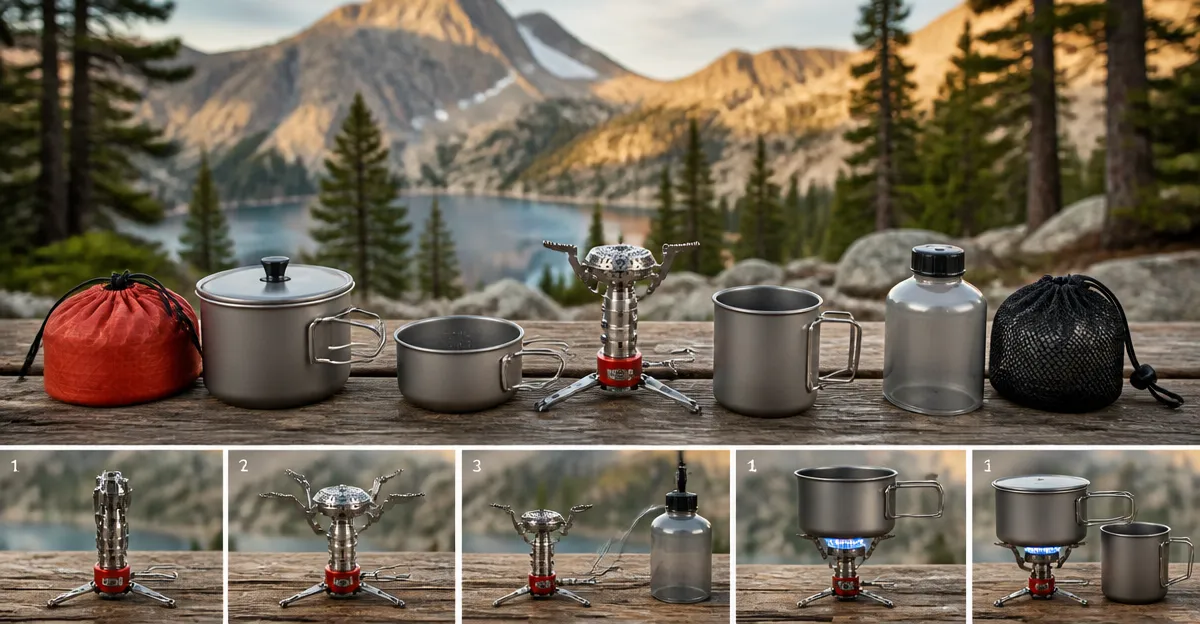
How to Build a Two-Person Ultralight Backpacking Kitchen
In this guide the reader will learn how to assemble a compact, efficient kitchen for two hikers who prioritize weight savings without sacrificing cooking performance. The instructions combine reliable stove technology with modular cookware to enable gourmet meals on the trail. By following the steps one can reduce pack volume, streamline fuel management, and enjoy consistent results in diverse environments. The value lies in creating a repeatable system that balances durability, cost, and ease of use.
What You Will Need
- MSR PocketRocket 2 – ultralight canister stove (US$49.95, 4.8/5 rating)
- BRS-3000T Titanium Stove – ultra‑compact titanium stove (US$16.90, 4.6/5 rating)
- MalloMe Mess Kit – 10‑piece aluminum cookware set (US$24.99, 4.5/5 rating)
- Odoland Mess Kit – 6‑piece lightweight cookware set (US$28.99, 4.5/5 rating)
- THTYBROS 27‑Piece Set – extensive cookware for 2‑4 people (US$49.99, 4.4/5 rating)
- Isobutane‑propane fuel canisters compatible with the MSR stove
- Lightweight backpack with external attachment loops
- Collapsible water container (2 L capacity)
Step 1 – Choose the Primary Heat Source
The first decision concerns the stove that will provide the majority of cooking power. The MSR PocketRocket 2 offers a proven balance of speed, reliability, and minimal weight at 2.6 oz, boiling one liter of water in 3.5 minutes. Its self‑sealing threaded canister connection ensures global fuel availability, which is essential for long‑distance travel across varied regions. For backup or low‑intensity simmering the BRS‑3000T Titanium Stove provides a feather‑light 26 g option that can bring a liter to a boil in just under three minutes while consuming less fuel.
By pairing a high‑output canister stove with an ultra‑light titanium stove, the system retains flexibility for both rapid boil and quiet simmer scenarios. The MSR’s adjustable flame permits gourmet cooking, whereas the BRS‑3000T’s simple manual valve excels in emergency or low‑fuel situations. Selecting these two devices creates redundancy without exceeding a combined weight of approximately 3 oz, preserving the ultralight ethos.
Step 2 – Select a Complementary Cookware Set
Next, the user must choose cookware that nests efficiently with the chosen stoves. The MalloMe Mess Kit provides a ten‑piece aluminum ensemble that includes a pot, pan, and two bowls, all with non‑stick surfaces that reduce the need for additional oil. Its anodized construction conducts heat quickly, matching the rapid boil capability of the MSR stove, while the included drawstring pouch consolidates the pieces into a compact bundle.
For users who prioritize absolute minimalism, the Odoland Mess Kit supplies two non‑stick pots, a foldable stove, and a spork in a single mesh bag. The integrated stove is designed to fold flat, allowing it to be stored alongside the MSR’s protective case. When the group anticipates longer stays or desires a larger variety of dishes, the THTYBROS 27‑Piece Set offers a complete kitchen with kettle, plates, and stainless‑steel utensils, yet still nests to a volume smaller than a football.
Choosing between these sets depends on the weight budget and meal complexity; the MalloMe kit adds versatility for breakfast and dinner, while the Odoland kit excels for ultra‑light day trips, and the THTYBROS set serves larger groups without compromising packability.
Step 3 – Organize Fuel and Safety Accessories
Fuel management is critical for a two‑person itinerary that may span multiple days. The MSR PocketRocket 2 requires high‑performance isobutane‑propane canisters; these are sold separately and should be stored in a protective sleeve to prevent puncture. It is advisable to carry one full canister (approximately 230 g) and a spare half‑canister for emergencies. The BRS‑3000T does not include an ignition device, so a lightweight windproof lighter or ferro rod should be attached to the pack’s exterior loops.
Safety considerations include a small fire‑extinguishing blanket and a portable carbon monoxide detector when cooking inside a shelter. All items should be positioned in easily reachable pockets to enable rapid response in windy conditions. By allocating dedicated slots for fuel, ignition, and safety gear, the kitchen remains organized and the user can focus on cooking rather than rummaging through the pack.
Step 4 – Pack the Kitchen for Optimal Weight Distribution
Effective packing begins with placing the heaviest component, the MSR PocketRocket 2, in the center of the backpack’s frame to maintain balance. The stove’s hard case (4.2 oz) can be tucked into a side compression pocket, ensuring that the fuel canister remains upright and accessible. Next, nest the MalloMe or Odoland cookware inside the internal mesh sleeve; the aluminum pots fit snugly around the titanium BRS‑3000T when folded, creating a single compact block.
The THTYBROS 27‑Piece Set, if selected, should be disassembled and nested according to the manufacturer’s instructions, then placed in the top compartment to keep the weight low and the center of gravity stable. Finally, secure the water container at the bottom of the pack to act as a stabilizing ballast. This arrangement distributes load evenly, reduces fatigue, and preserves the ultralight profile.
Step 5 – Set Up the Kitchen at Camp
Upon arrival at the campsite, the user should clear a flat, wind‑sheltered area and lay down a lightweight groundsheet to protect cookware from debris. The MSR PocketRocket 2 is attached to the included protective case, then positioned on a stable rock or tripod; its serrated pot‑supports accommodate the MalloMe pot or Odoland pan directly without additional brackets. Ignite the stove using the built‑in piezo igniter (if using the Deluxe model) or a separate lighter for the BRS‑3000T.
Adjust the flame to a rolling boil for rapid water heating, then reduce to a low simmer for sauces or oatmeal. The titanium BRS‑3000T can be employed for delicate simmering by flipping its legs to support the pot at a lower height, which reduces heat intensity. By mastering flame control, the user can prepare breakfast, lunch, and dinner with minimal fuel consumption, thereby extending the duration of the trip.
Tips & Pro Tips
- Pre‑heat the pot for 30 seconds before adding water to improve boil efficiency.
- Use a windscreen made from a compact aluminum sheet to protect the flame and reduce fuel use.
- When cooking at altitude, increase the flame slightly because water boils at lower temperatures.
- Pack a small silicone gasket repair kit to address any O‑ring wear on the BRS‑3000T.
- Rotate the MSR’s fuel canister halfway through the trip to ensure even fuel consumption.
Troubleshooting
Problem: Flame is weak or inconsistent.
Solution: Verify that the fuel canister is fully seated and that the valve is open. If the issue persists, purge the stove by releasing a short burst of fuel to clear any blockage, then re‑ignite.
Problem: Pot does not sit securely on the stove.
Solution: Ensure the serrated pot‑support arms are fully extended and that the pot’s base is clean and flat. The titanium BRS‑3000T’s legs can be adjusted to a lower angle for better stability.
Conclusion
By following this systematic approach one can construct a two‑person ultralight backpacking kitchen that delivers reliable performance, minimal pack weight, and culinary versatility. The combination of the MSR PocketRocket 2, BRS‑3000T Titanium Stove, and a thoughtfully selected cookware set equips hikers to prepare nutritious meals in remote environments. The guide emphasizes redundancy, efficient fuel use, and ergonomic packing, all of which contribute to a successful outdoor experience. One is encouraged to adapt the recommendations to personal preferences and to enjoy the freedom that an ultralight kitchen provides.
Frequently Asked Questions
What are the essential components for a two‑person ultralight backpacking kitchen?
A lightweight stove (e.g., MSR PocketRocket 2 or BRS‑3000T), a compact titanium or aluminum cookware set, and a fuel canister or solid fuel source.
How does the MSR PocketRocket 2 compare to the BRS‑3000T titanium stove?
The PocketRocket 2 offers higher heat output and easy canister fueling, while the BRS‑3000T is cheaper, ultra‑compact, and works with solid fuel tablets.
Can the MalloMe Mess Kit handle meals for two hikers?
Yes, its 10‑piece aluminum set includes pots, pans, and utensils sized for two‑person portions while staying lightweight.
What tips reduce pack volume for a two‑person kitchen?
Choose nested cookware, use a single fuel canister shared between stoves, and pack multi‑function tools that replace separate items.
How should I maintain my ultralight stove on the trail?
After each use, let the stove cool, wipe away residue, and periodically check the burner for clogs to ensure consistent performance.